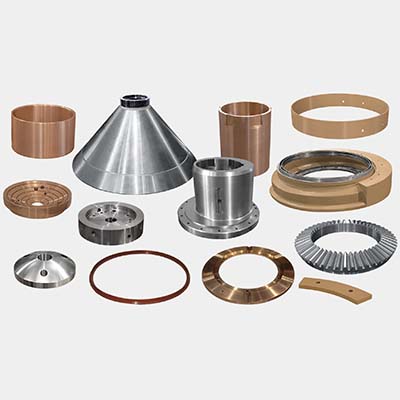





In the demanding worlds of mining and aggregate processing, efficiency is everything. Operations run around the clock, subjecting heavy machinery to extreme wear and tear. Crushers, serving as the heartbeat of these operations, bear the brunt of abrasive materials, massive impact forces, and continuous mechanical stress. When a jaw plate, a cone liner, or a blow bar fails unexpectedly, the ripple effect halts production, inflames operational costs, and strains project deadlines. This makes the selection of a reliable replacement parts provider a critical strategic decision. Partnering with the right crusher part manufacturer can mean the difference between seamless, profitable production and chronic, costly downtime.
Understanding the Operational Impact of Replacement Components
Crushers operate in some of the harshest environments on earth. Whether processing hard igneous rock, highly abrasive quartz, or recycled concrete, the internal components undergo severe mechanical and thermal stress. Low-quality or ill-fitting replacement parts wear down prematurely, leading to frequent maintenance interventions. This not only increases expenditure on parts but also exposes maintenance crews to hazardous repair environments more often than necessary.
When plant managers invest time in vetting and selecting an elite crusher part manufacturer, they are prioritizing equipment longevity and operational safety. High-performance parts maintain optimal crusher settings, ensure consistent product gradation, and reduce the energy consumption of the machine. Consequently, the choice of supplier ripples through every facet of plant performance, directly influencing throughput and profit margins.
Key Qualities to Look for in a Crusher Part Manufacturer
Not all suppliers are created equal. The market is saturated with brokers, resellers, and direct producers, each claiming to offer the best solutions. To secure reliable, high-performing components, procurement teams must evaluate potential partners based on specific, stringent criteria.
Industry Experience and Track Record
Experience matters profoundly in heavy industry. A seasoned manufacturer understands the nuanced demands of different crushing stages, whether primary jaw crushing, secondary cone crushing, or tertiary impact crushing. They possess historical data on how various alloys behave under specific geological conditions. Reviewing a manufacturer’s portfolio, case studies, and client testimonials provides valuable insight into their reliability and technical competence.
Comprehensive Product Range
A versatile supplier should be able to cater to various equipment brands and models, including industry giants like Metso, Sandvik, Terex, and Cedarapids. Whether an operation runs jaw crushers, cone crushers, gyratory crushers, or vertical shaft impact (VSI) crushers, having a single source for diverse wear parts simplifies inventory management and streamlines procurement processes.
Quality Control, Metallurgy, and Material Selection
The backbone of any durable crusher part is metallurgy. Mining environments demand materials that can withstand high impact and extreme abrasion simultaneously. Traditional manganese steel remains the gold standard for parts subject to work-hardening under high impact, while alloy steels and high-chrome irons are favored for high-abrasion, low-impact scenarios.
A reputable crusher part manufacturer does not cut corners on raw materials. They employ rigorous metallurgical testing, including spectral analysis, hardness testing, and microstructural examination, to ensure that every casting meets exact specifications. Furthermore, advanced manufacturing facilities utilize precision foundry techniques, such as computer-aided casting simulation and strict heat treatment protocols, to eliminate internal defects like porosity, shrinkage, and micro-cracks. These hidden flaws are often the root cause of premature structural failure under heavy loads.
Customization and Engineering Support
Every quarry and mine site has unique geological conditions. Standard, off-the-shelf wear parts may not always deliver optimal performance for specific rock hardness, abrasiveness, or feed size distributions. This is where engineering capability becomes a vital differentiator.
Top-tier manufacturers offer custom redesigns and proprietary alloy formulations tailored to address specific operational bottlenecks. If a plant experiences uneven wear patterns or unusually rapid degradation of a specific liner, a capable manufacturer can analyze the operational data, modify the component geometry, or upgrade the alloy composition to extend wear life significantly. Having access to responsive field engineers and metallurgists ensures that operators are never left navigating complex mechanical challenges alone.
Balancing Initial Cost and Long-Term Value
Budget constraints are a reality for every business, and it is tempting to gravitate toward the lowest-priced components available on the market. However, in the realm of crushing and screening, cheap parts almost always translate to higher long-term costs.
A cheap wear part that fails halfway through its expected lifecycle incurs multiple hidden expenses: the cost of the replacement part itself, the labor required for premature installation, the lost revenue during unplanned downtime, and potential collateral damage to other internal crusher components. When evaluating a crusher part manufacturer, plant managers must calculate the total cost of ownership rather than focusing solely on the purchase price. Premium components that last longer ultimately deliver a significantly lower cost per ton processed.
Evaluating Logistics, Delivery, and After-Sales Support
Even the highest-quality parts are of little use if they sit in a transit warehouse when an emergency breakdown occurs. Supply chain reliability is paramount. A dependable supplier maintains robust inventory levels of high-demand items, offers efficient global shipping logistics, and provides transparent lead times.
Moreover, exceptional after-sales support sets industry leaders apart. A committed partner stands behind their products with warranty guarantees, technical troubleshooting, and ongoing wear-rate monitoring. They work collaboratively with plant operators to analyze worn components, diagnose underlying mechanical issues, and continuously refine maintenance strategies.
Conclusion
Choosing the right supplier for crushing equipment components is a foundational decision that shapes the productivity, safety, and profitability of mining and aggregate operations. By prioritizing technical expertise, superior metallurgy, custom engineering capabilities, and dependable after-sales support, plant managers can build resilient supply chains that withstand the rigors of heavy industry. Investing time into vetting a trusted crusher part manufacturer ensures that your operations remain uninterrupted, efficient, and well-positioned for long-term success in a competitive market.