

Introduction
“The vape tastes burnt” is a common complaint among people who use vaping products. Instead of the expected flavor, the vapor may have an unpleasant scorched, bitter, or smoky taste. This experience The Vape Tastes Burnt can be surprising and uncomfortable, especially when the device previously seemed to work normally. A burnt taste can indicate that something is wrong with the device, its heating components, or the liquid inside it.
Understanding why a vape may produce a burnt taste is important for recognizing potential device problems and avoiding unnecessary exposure to irritating substances. Although the cause may sometimes appear minor, a burnt flavor should not be ignored. This article explores the common reasons behind this experience, the potential health concerns, and important safety considerations.
What Does a Burnt Vape Taste Like?
A burnt vape taste is generally different from the flavor normally associated with the liquid. Users may describe it as bitter, harsh, smoky, or similar to scorched material. The unpleasant taste may occur suddenly or develop gradually over time.
In some cases, the flavor is accompanied by a scratchy sensation in the throat, coughing, or irritation. These symptoms can make the experience particularly uncomfortable.
The exact taste can vary depending on the device, the liquid formulation, and the condition of its heating components. However, an unusually burnt flavor is a reason to stop using the device rather than assume that the change is harmless.
Common Reasons a Vape May Taste Burnt
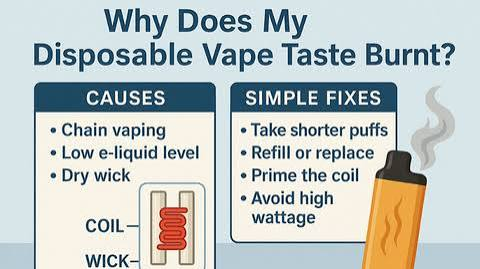
1. Problems With the Heating Element
Vaping devices use a heating element to turn liquid into an aerosol. Depending on the design, this component works with a wick or another liquid-delivery system.
If the heating element becomes damaged, contaminated, or excessively hot, the resulting aerosol may have an unpleasant taste. Over time, residue from repeated use can also affect flavor and device performance.
A persistent burnt taste may therefore indicate that the heating components are no longer functioning as intended. Continuing to use a device in this condition can increase exposure to unwanted substances.
2. Liquid Delivery Problems
Many vaping devices depend on liquid reaching the heating area consistently. When the supply becomes insufficient or the delivery system stops working properly, the heating components may become too hot.
This can contribute to a harsh, scorched taste. Problems may arise from a nearly empty reservoir, a damaged internal component, or a malfunctioning device.
Because the cause cannot always be identified from taste alone, it is important not to assume that a particular adjustment will resolve the problem safely.
3. Old or Degraded E-Liquid
E-liquid can change over time, particularly when exposed to heat, light, or air. These conditions may affect its color, smell, and flavor.
Liquid that smells unusual, appears contaminated, or has changed significantly should not be used. A strange taste may also come from the interaction between the liquid and residue inside the device.
Proper storage can help preserve products, but it cannot guarantee that an old or questionable liquid remains suitable for use.
4. Residue and Device Wear
Repeated use can leave deposits on internal components. These deposits may alter the flavor of the aerosol and interfere with normal device performance.
Disposable products can also develop faults, while reusable devices may experience wear in their heating or liquid-delivery systems.
A burnt flavor that repeatedly returns is not something to dismiss as a normal part of vaping. It may signal that the device is damaged, worn out, or otherwise unsuitable for continued use.
5. Device Malfunction or Overheating
Electronic devices can develop electrical or mechanical faults. A malfunctioning battery, damaged connection, or heating system problem may cause unusual temperatures or inconsistent performance.
Warning signs can include excessive heat, leaking, swelling, unusual noises, or a strange chemical smell. These symptoms deserve particular attention because they may indicate a safety hazard beyond the unpleasant flavor itself.
A device showing signs of overheating or physical damage should not be used or charged.
Is a Burnt Vape Taste Harmful?
A burnt taste does not identify a specific chemical or establish how much exposure has occurred. Nevertheless, it can indicate abnormal heating or changes in the materials being aerosolized.
Vaping aerosols are not simply harmless water vapor. They can contain nicotine, fine particles, flavoring chemicals, and other substances, depending on the product. Excessive heating may also increase the formation of certain harmful compounds.
Inhaling an unusually harsh aerosol may irritate the mouth, throat, and respiratory system. Possible symptoms include coughing, throat discomfort, chest irritation, or shortness of breath.
Nicotine-containing products also carry risks of dependence, and the long-term effects of vaping are still being studied. A burnt taste should not be interpreted as proof of severe injury, but neither should it be treated as evidence that the product is safe.
The safest response is to stop using the device and avoid further exposure.
What to Do When a Vape Tastes Burnt
Stop Using the Device
The first priority is to stop inhaling from a device that produces a burnt or unusual taste. Repeated exposure is unnecessary, particularly when the cause is uncertain.
Do not keep testing the device by taking additional puffs to see whether the taste disappears.
Check for Visible Damage Without Disassembling It
Once the device is no longer in use and has cooled, look for obvious external warning signs, such as cracks, leakage, swelling, or unusual heat. Avoid opening the battery compartment or attempting electrical repairs.
If the product appears damaged or defective, follow the manufacturer’s safety guidance or contact the seller for assistance.
Avoid Improvised Repairs
Household tools, incompatible components, and makeshift repairs can introduce additional risks. A device that repeatedly produces a burnt taste may need professional assessment or safe disposal rather than experimentation.
Do not attempt to modify a battery or bypass built-in safety features.
Dispose of Faulty Products Responsibly
Vaping devices often contain lithium-ion batteries and electronic components. They should not automatically be placed in ordinary household waste.
Follow local electronic-waste and battery-disposal guidance. If a battery is swollen, leaking, or unusually hot, avoid handling it unnecessarily and seek advice from an appropriate local waste or safety service.
Can a Burnt Taste Be Prevented?
The most reliable way to avoid vaping-related risks is not to vape. For people who already use these products, recognizing signs of damage and following manufacturer safety instructions can help prevent some device-related incidents.
Products should be kept away from excessive heat, moisture, and direct sunlight. They should also be stored securely, especially around children and pets.
It is important to use only compatible charging equipment and to avoid charging devices that show signs of damage. Products with uncertain origins, altered packaging, or questionable liquid contents may carry additional risks.
However, even a well-maintained device can malfunction. No maintenance routine can make vaping completely safe or guarantee that a burnt taste will never occur.
When Should You Seek Medical Advice?
Stop using the product if a burnt taste is followed by persistent coughing, throat irritation, nausea, or other unusual symptoms.
Seek urgent medical attention if you experience difficulty breathing, significant chest pain, fainting, or rapidly worsening symptoms. Do not resume vaping simply because the unpleasant taste disappears.
If liquid has leaked onto the skin or into the eyes, follow appropriate first-aid guidance and seek medical advice when needed. Nicotine-containing liquids can be poisonous if swallowed, particularly by children and pets.
Conclusion
The phrase “the vape tastes burnt” describes an unpleasant experience that may be associated with heating problems, liquid-delivery issues, residue, product deterioration, or device malfunction. Although the exact cause varies, a burnt flavor should never be ignored or treated as a normal sign of operation.
Stopping use, avoiding improvised repairs, recognizing signs of damage, and disposing of faulty devices responsibly are important safety measures. Anyone who experiences persistent or serious symptoms after vaping should seek appropriate medical care.
Ultimately, understanding the possible reasons behind a burnt vape taste helps people recognize when a product may be unsafe. The most important step is to prioritize health and safety rather than continue using a device that produces an unusual or irritating aerosol.