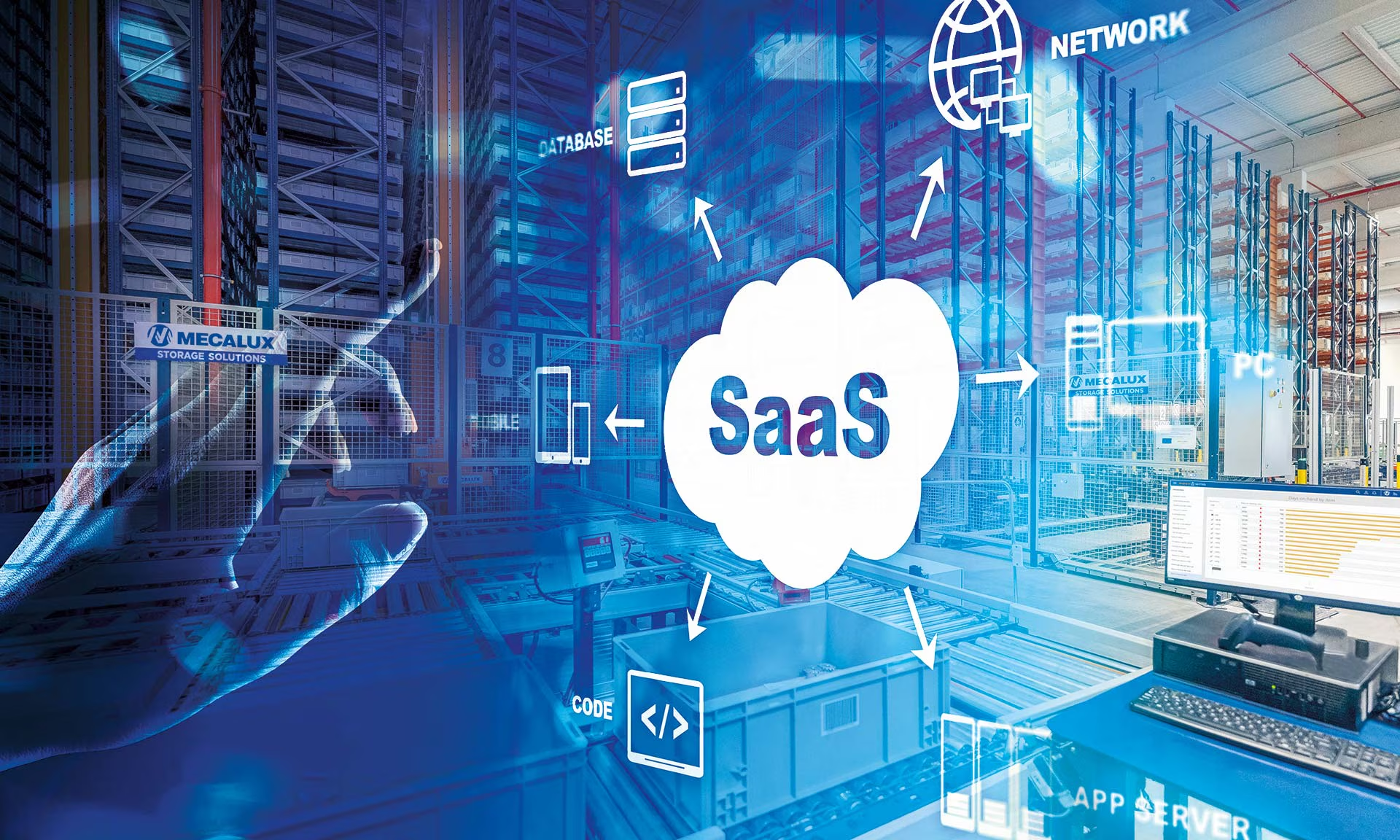



Customer success has become one of the most important parts of building a sustainable Software as a Service (SaaS) business. While attracting new customers is essential for growth, retaining existing users and helping them achieve meaningful results can have an even greater impact on long-term business performance. A strong customer success strategy focuses on understanding user needs, providing ongoing support, and creating experiences that encourage customers to continue using a SaaS product.
For SaaS companies serving small businesses, customer success is especially important. Small business owners often have limited time, resources, and technical expertise. They need software that is simple, dependable, and capable of solving real operational challenges. When SaaS providers understand these expectations and consistently deliver value, they can build stronger and longer-lasting customer relationships.
Understanding the Role of Customer Success in SaaS
Customer success is more than traditional customer support. Support generally focuses on resolving problems when they occur, while customer success takes a proactive approach. Its purpose is to help customers understand a product, use its features effectively, and achieve the outcomes they expect.
A successful SaaS company considers the entire customer journey. This journey may begin when a potential customer discovers the software and continues through signup, onboarding, daily usage, upgrades, and renewal.
For example, a small business may adopt appointment scheduling software for small businesses to simplify bookings and reduce administrative work. Simply providing access to the software is not enough. The SaaS provider should also help the customer configure booking options, understand calendar management, communicate with clients, and use reporting features.
When customers can clearly see how a product improves their daily operations, they are more likely to remain engaged.
Creating a Smooth Onboarding Experience
The first few interactions with SaaS software can strongly influence a customer’s perception of the product. A complicated onboarding process can create frustration before the customer has experienced the software’s benefits.
Effective onboarding should make the initial experience straightforward. SaaS businesses can use guided setup processes, tutorials, welcome emails, knowledge bases, and short training sessions to help users get started.
The onboarding process should also focus on the customer’s specific goals. Instead of overwhelming users with every available feature, businesses can introduce the functions that are most relevant to their needs.
For instance, a small service business using appointment scheduling software for small businesses may primarily need online booking, automated reminders, calendar synchronization, and customer notifications. Introducing these features first can help the user achieve value quickly.
Building Relationships Through Personalization
Long-term customer relationships become stronger when users feel that a SaaS provider understands their needs. Personalization can make communication more relevant and useful.
SaaS companies can segment customers according to business size, industry, product usage, subscription level, or specific objectives. This information can then be used to deliver more appropriate educational content, product recommendations, and support.
Personalization does not necessarily require complicated technology. Even simple improvements, such as addressing customers by name, recommending relevant features, or sending helpful usage tips, can make communication feel more meaningful.
For growing SaaS businesses, personalization can also help identify customers who may need additional guidance. Users who rarely log in or fail to complete important setup steps may benefit from proactive assistance.
Measuring Customer Engagement
Data plays an important role in modern customer success strategies. SaaS businesses can monitor product usage to understand whether customers are receiving value.
Useful indicators can include login frequency, feature adoption, support requests, subscription changes, and customer feedback. These measurements can help teams identify patterns and potential challenges.
However, data should not replace human understanding. A customer who uses only a few features may still be highly satisfied if those features solve an important problem. Therefore, usage data should be combined with surveys, conversations, reviews, and direct feedback.
Customer health scores can also help SaaS teams organize their efforts. A health score may combine several indicators to identify accounts that appear engaged, stable, or at risk.
Providing Proactive Support
Waiting for customers to report problems can result in unnecessary frustration. Proactive customer success involves identifying potential obstacles before they become serious issues.
SaaS companies can provide helpful reminders, educational resources, product updates, and recommendations based on customer behavior. If a user has not completed an important setup step, for example, the company can provide a simple guide explaining what to do next.
Proactive support is particularly valuable for small businesses because owners may not have dedicated staff to manage software systems. Clear guidance can save time and help them focus on serving their own customers.
Turning Feedback Into Product Improvements
Customer feedback is one of the most valuable resources available to SaaS businesses. Users interact with products every day, which means they can identify practical improvements that internal teams may overlook.
Feedback can be collected through surveys, customer interviews, support conversations, reviews, and feature requests. SaaS companies should analyze this information carefully rather than treating every request as an immediate development requirement.
Common feedback themes can reveal opportunities for improving usability, performance, integrations, documentation, or customer communication.
When businesses act on valuable feedback, they can also strengthen customer relationships. Users are more likely to feel invested in a product when they see that their experiences contribute to future improvements.
Maintaining Value After the Sale
Customer success should continue long after onboarding. SaaS products often introduce new features, integrations, automation options, and improvements over time. Customers need to understand how these changes can benefit their businesses.
Regular educational communication can keep users informed without overwhelming them. Helpful newsletters, tutorials, webinars, product guides, and feature announcements can encourage customers to discover additional value.
For example, a business that initially uses appointment scheduling software for small businesses simply to accept bookings may later benefit from automated reminders, customer management, analytics, and workflow automation.
Helping customers discover these capabilities can increase product engagement and strengthen retention.
Building Trust Through Reliable Communication
Trust is a fundamental part of long-term SaaS relationships. Customers expect software providers to communicate clearly, especially when there are service interruptions, policy changes, pricing updates, or significant product changes.
Transparent communication can prevent uncertainty and demonstrate respect for customers. SaaS businesses should avoid unnecessary complexity in their messages and provide practical information about what users need to know.
Reliable support also contributes to trust. Customers should know where to find help and how to contact the company when they encounter an issue.
Encouraging Customer Advocacy
Satisfied customers can become valuable advocates for a SaaS brand. When users achieve measurable results, they may be willing to provide testimonials, reviews, referrals, or case studies.
Customer advocacy should develop naturally from a positive experience. SaaS companies can make it easy for satisfied customers to share their experiences, while continuing to focus on delivering genuine value.
A strong customer success program therefore creates benefits beyond retention. It can contribute to referrals, reputation, and sustainable growth.
The Future of SaaS Customer Success
As competition in the SaaS market continues to increase, customer relationships will remain a major differentiator. Products may offer similar features, but companies can distinguish themselves through better onboarding, personalization, proactive assistance, and consistent communication.
Automation and artificial intelligence can support customer success teams by identifying usage patterns, answering common questions, and delivering timely information. However, technology works best when combined with human understanding and thoughtful relationship management.
Ultimately, SaaS customer success is about helping customers accomplish something important. Whether the goal is organizing appointments, improving productivity, increasing sales, or reducing administrative work, customers stay with products that consistently deliver meaningful value.
Conclusion
Building long-term user relationships requires more than selling software. SaaS companies need to understand customer goals, simplify onboarding, provide proactive support, listen to feedback, and continually demonstrate value.
For small businesses, tools such as appointment scheduling software for small businesses can become an important part of everyday operations. When SaaS providers make those tools easy to adopt and useful over the long term, they create stronger customer experiences.
A customer-success-focused approach benefits both sides. Customers receive better guidance and greater value from their software, while SaaS businesses can build stronger retention, trust, advocacy, and sustainable growth. In an increasingly competitive software market, lasting relationships can become one of the most important foundations for success.